One of the biggest mistakes I made as an attraction owner was not raising prices sooner. For years, one of our businesses stayed consistently busy. We had great reviews, happy customers, and a full schedule. I assumed that meant our pricing was perfect. It wasn’t.
Looking back, I realized we had left a significant amount of revenue on the table simply because we never tested higher pricing. Being busy doesn’t necessarily mean you’re maximizing profit. Sometimes it simply means you’re underpriced, especially in larger venues like FECs and trampoline parks where volume can mask pricing inefficiencies. If you want a strong entertainment marketing strategy, getting your pricing right is the foundation.
How Do You Determine Your Starting Price?
One of the questions we hear most often is how to know what to charge. If opening an attraction that already exists, whether it’s an escape room, axe throwing venue, paint splatter studio, rage room, mini golf, trampoline park, FEC, or another entertainment concept, the easiest place to start is by researching your competitors.
Look at businesses that offer a similar experience and see what they’re charging. If multiple successful operators have settled around a certain price point, that’s usually a good indication of what the market is willing to pay. That doesn’t mean you should copy their pricing forever. It simply gives you a logical starting point.
From there, adjust based on your local market and demographics, the quality of your experience, the uniqueness of your attraction, your location, and the overall value you provide. Also consider your proximity to competitors, including not just similar FECs and trampoline parks but also other large-scale entertainment venues targeting the same audience.
If your attraction offers a premium experience, better service, a more immersive environment, or is located in a premium market, don’t be afraid to charge more. Customers don’t buy minutes. They buy memories.
What If You’re Creating Something New?
Sometimes there isn’t a direct competitor. I’ve been in that situation myself. One example is Spin Art Nation. When we launched it, there were only a few splatter rooms at that time and no spin art studios. This was our main product. Instead, we asked ourselves what existing experience customers would naturally compare us to.
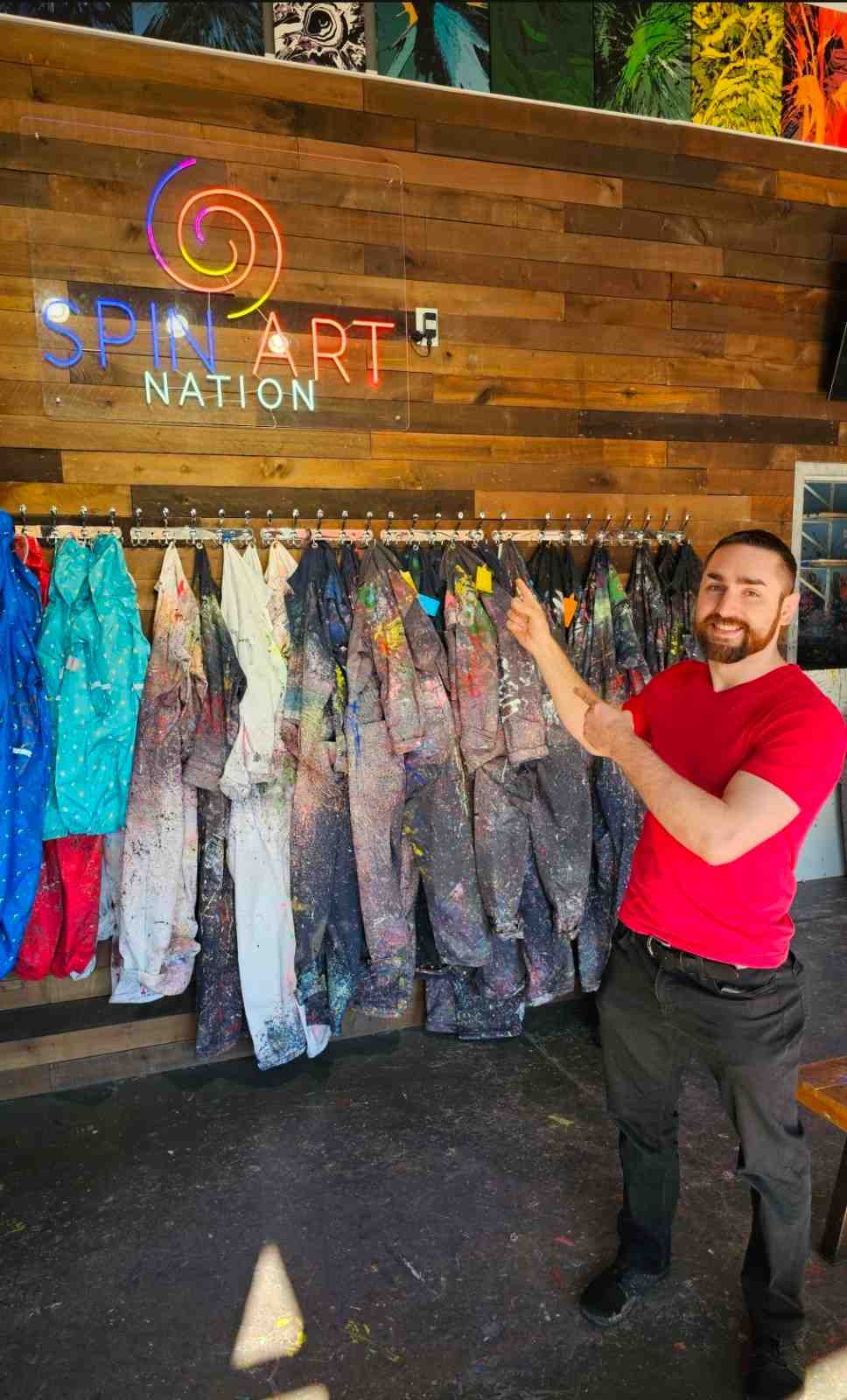
For us, the answer was Paint & Sip studios. Customers were paying for a creative, artistic experience, so Paint & Sip pricing gave us a logical starting point. We used those businesses as our benchmark and then adjusted our prices over time based on customer demand, operating costs, the quality of our experience, and the value we delivered.
This approach works for almost any innovative attraction, including larger concepts like FECs or trampoline parks introducing new attractions or hybrid experiences. If your exact concept doesn’t exist, find the closest comparable experience from the customer’s perspective. Launch with a reasonable price, gather data, and refine your pricing as your business grows.
Your Goal Isn’t the Lowest Price
Many owners worry that increasing prices will hurt sales. In reality, your goal should be to find the highest price your market is willing to pay without causing a meaningful decline in bookings. Pricing isn’t permanent. Raise your prices and watch what happens. If bookings decline more than you’re comfortable with, adjust them back. But if you never test your pricing, you’ll never know what your customers are actually willing to pay.
Also, don’t forget about inflation and rising costs. If you lease your space, there’s a good chance your rent increases 3% or more every year. Utilities go up. Labor costs go up. Supplies go up. If your expenses are constantly increasing, why should your prices stay the same?
This is especially important for high-capacity venues like FECs and trampoline parks, where even small pricing adjustments can significantly impact overall revenue.
“If nobody ever tells you your prices are too high, they’re probably too low.”
— Attractions Marketing Pros
Use Dynamic Pricing to Maximize Revenue
Most modern booking systems allow you to charge different prices depending on demand. Take advantage of it. Charge premium pricing on weekends. Increase prices during holidays and peak seasons. Offer discounted pricing on slower weekdays. Adjust pricing based on time slots throughout the day.
This strategy is particularly powerful for larger venues like trampoline parks and FECs, where demand fluctuates heavily throughout the week and day. It is a key part of understanding the family entertainment center industry.
Advertise Promotions Without Lowering Your Brand Value
Another strategy we recommend is keeping your regular website pricing higher while advertising exclusive promo codes through your marketing channels. You can do this on Google Ads, Facebook & Instagram Ads, email marketing, social media, and influencer campaigns. Customers feel like they’re getting a special deal while your regular pricing remains strong.
An additional benefit is that you can create different promo codes for different marketing channels. This allows you to track which campaigns are actually generating bookings and revenue. It is an excellent way to refine your family entertainment center marketing.
Higher Website Pricing Can Help With Groupon
Many attraction owners overlook this. If you decide to list your attraction on Groupon or another discount platform, remember that they typically require your deal to be based on your regular retail price. If your website price is already low, you’ll have to offer an even deeper discount to make the offer attractive.
If your regular pricing is higher, you can provide what appears to be a compelling discount while protecting your profit margins. This is something especially important for high-overhead venues like FECs and trampoline parks.
Everything Is Negotiable
When I first started working with Groupon years ago, I made another expensive mistake. I discounted our primary package by nearly 50% because I assumed that was simply how Groupon worked. It wasn’t.
As we gained experience, expanded to multiple locations, and proved that we could consistently generate sales, we negotiated dramatically better terms. Eventually, we were only discounting about 11% off our regular website price, and Groupon’s commission was approximately 10%. This is significantly better than what many businesses believe is possible.
The lesson? Never assume the first offer is the only offer. Everything is negotiable, especially if you have a proven business.
Why We Eventually Left Groupon
Even with favorable terms, we eventually decided to stop using Groupon altogether. The reason wasn’t the commission. As we continued investing in our attractions and building a premium brand, we realized Groupon was attracting a different type of customer than the one we wanted to build our business around.
Many Groupon customers were primarily searching for the biggest discount rather than the best experience. There’s nothing inherently wrong with that, but over time we found that our marketing dollars generated a much higher return when invested in channels that attracted guests who valued quality, left better reviews, spent more during their visit, and were more likely to become repeat customers. This is something that is critical for large venues like FECs and trampoline parks.
Instead of relying on discount platforms, we shifted those marketing dollars into SEO, paid advertising, social media, partnerships, email marketing, and other long-term customer acquisition strategies.
The Bottom Line
Pricing is one of the fastest ways to improve profitability, yet it’s one of the least tested areas of most attraction businesses. Don’t be afraid to experiment. Research your competitors. Find the closest comparable business if you’re launching something new. Test higher prices. Use dynamic pricing. Offer strategic promotions instead of permanent discounts. Negotiate aggressively with third-party platforms.
Most importantly, remember that being fully booked doesn’t necessarily mean you’re charging the right price. This is especially true for high-volume venues like FECs and trampoline parks, where strong attendance can hide missed revenue opportunities.
Your goal isn’t simply to fill your calendar. Your goal is to build a profitable attraction that delivers an incredible experience, allows you to continue investing in your business, takes care of your employees, and creates unforgettable memories for your guests.
Because at the end of the day, the best attraction isn’t always the cheapest one. It’s the one that consistently delivers exceptional value. If you want help building a digital marketing strategy that supports your pricing goals, Attractions Marketing Pros is here to help.